Education:
Examining schools is one of the easiest ways to see where a society is headed and where the culture is right now. But don’t just take my word for it. Many dictators used schools to give themselves more control within their countries. The Nazis realised this and used schools by completely changing the curriculum to push the Nazi agenda (in a country where homeschooling was already banned). The Soviet Union changed their education to heavily emphasise Marxist-Leninist ideology, support atheism, and collective labour, whilst suppressing Christian ideas. Fascist Italy taught the slogan “believe, obey, fight” to push acceptance of Mussolini’s government from a young age.
Broadly speaking, controlling education worked, helping give the government more control and generating support from the next generation. In all those examples, you can easily get a sense of how the culture was and where it was headed by looking at the schools. But you can also see the importance of schools, as Orwell said, “Who controls the past controls the future. Who controls the present controls the past.”
The Bible highlights the importance of education. Proverbs 22:6 states, “Train up a child in the way he should go; even when he is old, he will not depart from it.” However, in Britain, schools are told they must be impartial, balanced and non-partisan on topics like politics and religion. And where does morality come from, except from religious beliefs displayed in politics? So, in other words, the British government has no official aim to teach what is right and what is wrong? That isn’t completely correct to say; in the 2014 guidance, we see they gave schools guidance to teach ‘British values’ and some morality. It doesn’t seem clear what is meant by morality or how they argue what is right or wrong. They can’t use any religious or political principles to source the morality, so how can they teach it without anything to go off?
It seems to me that in education within Britain, schools are being told more to try to teach with neutrality on morals. So let’s try to imagine what that would look like in practice. Imagine a school that is neutral on morality. Could a school really be neutral on whether stealing or rape is wrong? I hope not.
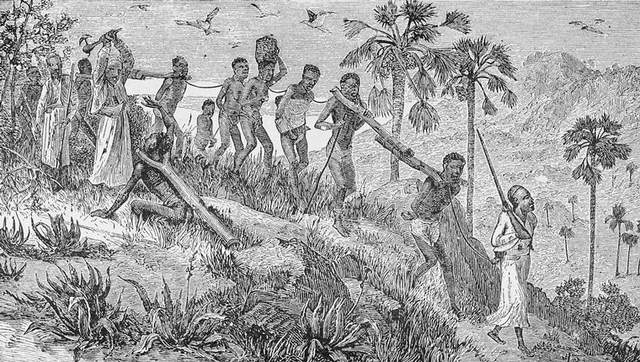
So schools will be persuaded to teach morality that is obvious or agreed upon societally. Does that mean it would have been morally correct to teach pro slavery teachings 200 years ago? Again, surely not. So how is it acceptable to tell a school to be neutral?
Perhaps schools should only be neutral on different worldviews. A school shouldn’t have any bias between religious or political ideas, right? What if that political view was far-right extremism? I can’t imagine a school not calling that out. What if it was a worldview promoting misogyny? Have we really gone so far as to say it isn’t the school's role to call out evil worldviews and immorality?
But when your morality isn’t neutral, it must be based on something.
C. S. Lewis put it like this, “There is no neutral ground in the universe: every square inch, every second, is claimed by God and counter-claimed by Satan.”
When we aren’t contending for education, Satan certainly is.
Broader Culture:
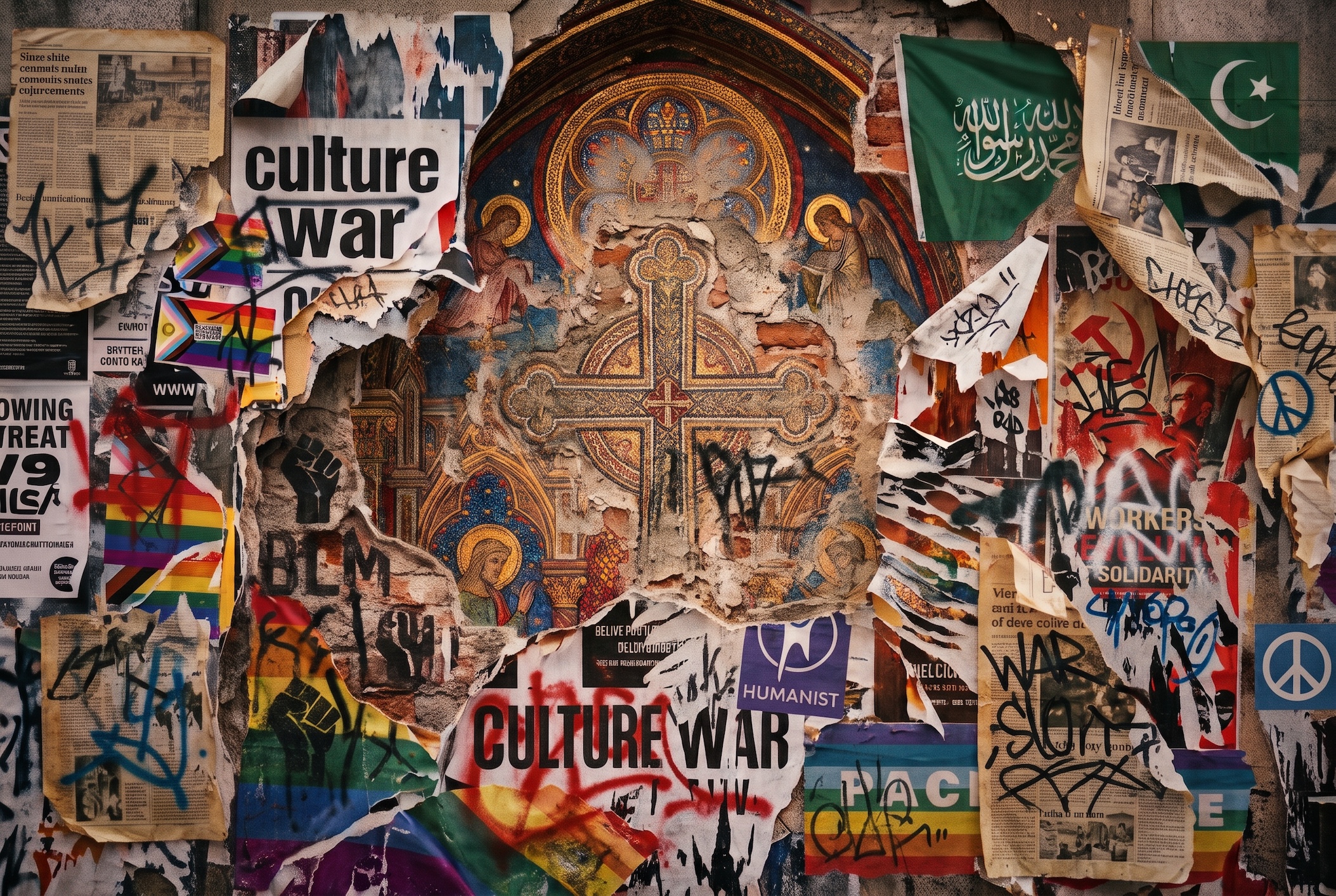
Although I believe I have expressed the impossibility of neutrality in schools, I have yet to explain the link to wider culture. Rev. Dr. Joe Boot, in his article ‘Christ and Culture’, argues that culture is “Religion externalised”.
Let’s take an Islamic country. The food is exclusively halal; the woman must cover up; they practice Sharia law; the education (in some places) is segregated, male-only. This is all the beliefs of Islam externalised into the broader culture. But Religion being externalised is not limited to just an Islamic culture. For example, in Christian Britain, we saw the government spend more on eradicating slavery than it ever earned directly from slavery, all based on Christianity. Polygamy and Pedophilia are illegal due to Christians implementing Christian ideas. The healthcare system was started by Christian due to their Christian beliefs. The religion a country follows is externalised within culture.
But this is not just limited to what we have known traditionally as ‘religion’. Lots of ideologies, while at face value political, are strangely religious. Let’s take communism, for example. For Communists, the root of evil in society is individual selfishness. The good in society is seen as equality from community working together. The ideal (heaven-like situation) is complete equality. The worst-case scenario (hell-like) situation is people acting on their own selfish desires.
Now, suddenly, this political idea starts to sound religious; we find belief in what is good and evil, and a salvific element, all perfectly fitting the criteria of a religion. Just to engrain this, let me go through a few more examples of ideologies/religions that may seem both good and evil:
Liberalism: Good - having ultimate freedom. Evil - being restricted from freedom. Salvation - found in something enabling freedom, i.e the constitution.
Trans Ideology: Good - being seen as they identify. Evil - being constrained to the gender assigned at birth. Salvation - being accepted with new identity
Buddhism: Good - lacking attachment to anything. Evil - having attachments to things. Salvation - reaching a point of no attachments.
Evolutionary-Atheist Ideology: Good - whatever is evolutionarily beneficial. Evil - What is evolutionarily negative. Salvation - having “no god” (but themselves - more on that in a bit)
Conservatism: Good - conserving the past. Evil - Drastic new change. Salvation - Conserving culture and country.
In comparison, let’s look at Christianity:
Christianity: Good - following God’s commandments. Evil - disobeying God’s commandments. Salvation - Jesus’ forgiveness on the cross
In every other ideology/religion, we see that the good is what eventually brings salvation. Christianity uniquely doesn’t have those tied together.
Every single culture is built on ideologies. And all ideologies are religious in nature. Therefore, culture cannot be neutral, because it is religious in nature.
None of this should surprise us; culture is religious in nature because humanity is designed to worship by nature. Every ideology has a god in place. That god is whatever brings them to that “salvation” point. The theologian Richard Bauckham wrote:
“ For a human being to seek such universal and eternal fame [as God does: 'That they may know I am the LORD'] would be to aspire to divinity, but God must desire to be known as God. The good of God’s human creature requires that he be known to them as God. There is no vanity, only revelation of truth, in God’s demonstrating his deity to the nations.”
In this quote, he expresses the ideology of seeking fame (which is prevalent in culture) and how it sets your god as yourself.
The Response:
The philosopher Karl Popper founded the ‘Paradox of Tolerance’. To summarise, he argues that it is impossible to have a society that is tolerant of all, because tolerance of all includes tolerance of those who want to destroy that society. Therefore, the society would no longer be tolerant of all. He argued that intolerance should be fought with arguments until that intolerant group turns to actual coercion or violence.
However, there is a fundamental issue with his argument where anyone could use his conclusion to justify silencing anyone who seems threatening (it is not always clear which side is tolerant and intolerant).
Given that it is impossible to have a neutral culture, and that if you tried to run a society neutral and tolerant to all, it would fail, we are left with the question of what religious basis a society should be run on.
The answer, of course, is Christianity.
In Acts 17, Paul addresses the “Men of Athens”. He points out that they are very religious. We can safely assume that Paul has been around Athens and studied the culture. He then points out the inscription ‘To the unknown god.’ He uses their religion to show the truth in Christ. He preaches to them the Gospel, and in the end, some mocked, and others joined and believed.
In the same way, we can study the religions defining culture today and use them to show the glory of Christ. Today, instead of finding the common ground in an inscription, we can find it in our moral duty and care. Many cultures care deeply about moral issues, but they don’t have a strong case for why they should; we have the answer in God (our moral lawgiver).
The Russian author Aleksandr Solzhenitsyn once said in reference to the Soviet Union, “Men have forgotten God; that’s why all this has happened.” The root of all the immorality in our culture and world is ultimately a forgetfulness, or lack of care, for God.
In Rod Dreher’s foreword to Carl Trueman’s book The Modern Self, he writes that “we might repent and, in so doing, find ways to keep the true light of faith burning in this present darkness, which comprehends it not.”
As Christians, we are called to repent of how we have aided Satan’s plans, not stood up to culture, and not pushed Christian morality. Repent of the ways we have aided evil Morality, the ways in which we have helped silence the Church even. The first call is to repent.
Solzhenitsyn in the same address also said, “Today’s world has reached a state which, if it had been described to preceding centuries, would have called forth the cry: 'This is the Apocalypse!’”, yet as Rod Dreher put it, “we have grown used to this kind of world; we even feel at home in it.”
But we shouldn’t feel at home in it; Earth is not our home. Eternity with Christ, where sin and immorality are no more, is our home. But we feel comfort where we should feel pain and sadness, in a world with so much immorality. Do we think we are less wicked than Sodom and Gomorrah? I would ask you to tell me how. As far as I see it, we are much worse.
Get new articles by email.